Showing posts with label highpoints. Show all posts

Friday, February 1, 2013

No. 16 - 2012 Year in Pictures

By - Bill Urbanski

2012 provided yet another year of adventure and travel and amazing experiences with great friends, old and new... and I have the pictures to prove it:

24. July - Kayaking returned to my life in a big way with excursions on the Francis E. Walter Dam, the Susquehanna River, and more.

23. October - Friends John, Jill, and Dave proudly join the ranks of fellow marathon completers, at Scranton's Steamtown Marathon.

22. November - Return to Joshua Tree N.P. for JTreeTweetUp 4. With Patrick on belay on a 5.9 sport climb called Sexy Grandma.

21. June - Car roof surfing with brother Steve on the Bonneville Salt Flats in Utah.


20. May - Busking on the streets of Scranton during a First Friday event.

19. February - With veteran marathoners Rob and Traci at South Carolina's Myrtle Beach Marathon. Rob's finish earned him his first trip to Boston.

18. June - Departing Mt. Hood Oregon. A week-long blizzard scuttled our summit bid. Nothing but blue skies on the day we had to leave.

17. June - Posing with fellow 48-Completers at the Highpointer Convention, Timberline Lodge, Mt. Hood, Oregon.

16. August - Deep water free soloing - a new summer time passion.

15. April - With the family, toasting the 75th Anniversary of Urbanski Farms.

14. July - Climbing "The Nose" - following 4th of July fireworks on the Mall in D.C.

13. June - Sunrise summit of Hawkeye Point, highest point in Iowa, with Patrick. Most challenging part of our climb was trying to stay awake on the all-night drive to get there.

12. March - St. Patrick's Day gig at Fiddler's Green. Performing as the Whiskey Rebels with Rich.

11. August - Slack Lining above the Library in Mocanoqua.  My newest passion (aka, newest way to hurt myself).

10. September - training for The Dangler, a 5.10a classic at the Gunks, using my homemade climbing gym / fireplace.

9. June - Smith Rock State Park, Oregon - 3 days of sport climbing in nature's Disneyland.
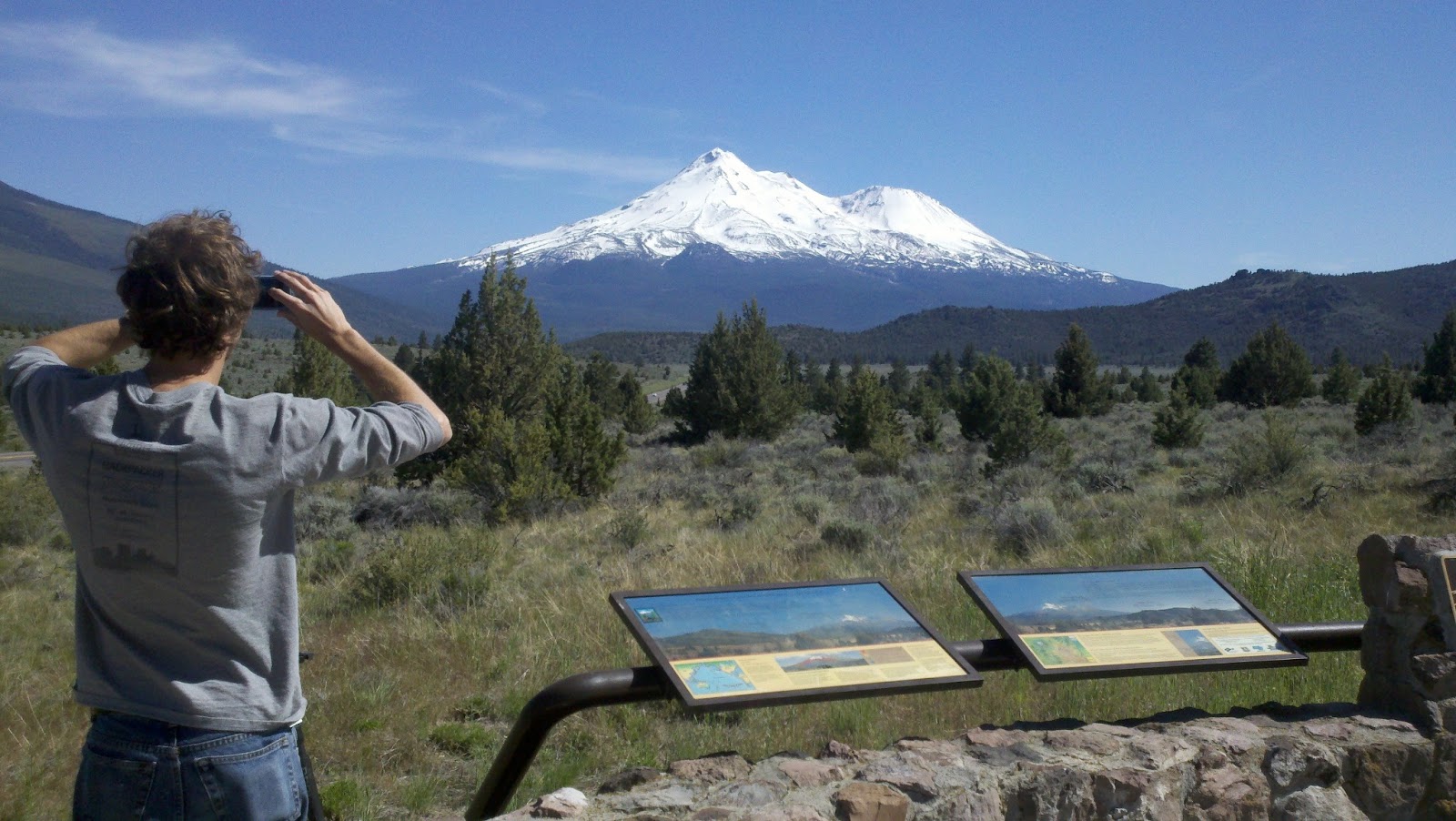
8.  June - On the approach to Mt. Shasta, California, gazing in awe at all its 10,000 feet of prominence. 

7. June - the iconic Monkey Face, 5.7 A0, at Smith Rock in Oregon. We ran out of time on our bid to send this classic, but look closely for other climbers about to enter the mouth.

 6. August - Cliff jumping - the perfect way to cool off on a sweltering summer day.

5. October - Urban climbing.  Thanks David for the opportunity, and Patrick for the photo.

4. June - Smith Rock climbing crew - a great day with friends old and new.

3. November - First fire. 3-year project complete. It has been a back-breaking labor of love.

2. October - sending The Dangler, 5.10a, at the Gunks in New York. I think the black and white really captures the moment. Thanks Jason for the photo.

1. June - Atop the 14,179 foot summit of Mt. Shasta, California with Patrick.

Many thanks to Patrick Gensel, David Weaver, Jason Gebauer and others for the photos, and for sharing many of these amazing adventures with me.


Wednesday, February 9, 2011

No. 11 - American Mountaineering Museum

- by Bill Urbanski


Patrick Gensel under the Iconic Arch on Washington Ave.
      When many people think of Golden Colorado, they instantly associate it with Coors beer.  The brewing company was established by German immigrant Adolph Coors in 1873, and today, the facility in Golden is the largest single brewery facility in the world. 

Bill with Adolph Coors
        I first visited Golden on my way to climb Mt. Elbert, Colorado’s highest mountain.  A steady rain caused a one-day delay in my climbing plans, so I needed to find a way to kill some time.  I did as many tourists do – I took the tour of the Coors Brewery.  I spent the night with friends and when the weather cleared, I climbed the next day.

      Last August, I once again found myself in metro Denver with some time to kill, as I waited on a late afternoon flight back east after climbing Devils Tower.  I returned to Golden, but this time I discovered a tourist gem, much more worth my time than some silly brewery tour.  I paid a visit to the Bradford Washburn American Mountaineering Museum

Main Exhibit Hall as Viewed From Above
       The museum opened in 2008 and, as its website proudly informs, is the “first and only museum in the United States dedicated to the heroism, technology, culture and spirit of mountaineering.”  It is named for Brad Washburn, a pioneer and legend in the field of mountaineering and cartography.  Washburn also served as director of the Boston Museum of Science for more than forty years.

Patrick Examining the Portaledge Display
      As you enter the museum’s main hall, be sure to watch your step.  A mock up of a glacial crevasse must be crossed.  Once you’re safely across, you will find exhibits on climbing gear, mountaineering history, mountain climate and culture, and much, much more.
  
      The centerpiece exhibit is a scale model of Everest, constructed in 1990 under the watchful eye of Mr. Washburn himself.

Mount Everest Scale Model
       Nearby the model of Everest is an interactive touch-screen exhibit.  Touch a region of the world, and pictures and descriptions of mountains will be displayed.

      This exhibit is a particular and personal source of pride for me, as photographs I have taken during my travels are actually a part of it.  A visitor can touch an icon for US state highpoints, and find on several states the attribution, “photo by Bill Urbanski.”  


Two of My Photographs on Display in the Museum
        Also housed in the same building is the American Alpine Club library.  It is one of the world’s largest libraries dedicated to mountaineering research and education, with over 20,000 books and video in its circulation.  I can say from personal experience, the staff is dedicated, knowledgeable and friendly. 

Bradford Washburn American Mountaineering Museum
      So if you find yourself in the Denver area and you have some time to kill, drive on over to Golden, but skip the brewery tour.  Instead, spend an hour or two or three exploring the true gem of the city – the Bradford Washburn American Mountaineering Museum.  You will not be disappointed.

Wednesday, January 26, 2011

No. 9 - Decision Time on the Mountain

- by Bill Urbanski   

      Decision making is a critical aspect of mountaineering, just as important as having the proper gear and the proper training.  Making the right decisions on the mountain can mean the difference between success and failure, and in some circumstances, between life and death.

       1967: decisions made by members of the Joe Wilcox party on Denali in the midst of an arctic hurricane resulted in seven deaths - one of the worst disasters in North American alpine mountaineering history.  Wilcox’s story is recounted in Forever on the Mountain.

Siula Grande - Simon Yates decided to cut the rope
      1985: in the Peruvian Andes, Joe Simpson dangled from the lip of a frozen cliff, held only by the rope attached to his climbing partner Simon Yates, who desperately clung to the icy slopes above.  Losing ground from his belay, and fearing that Simpson would drag them both over the edge and to their deaths, Yates made what in the abstract is an unfathomable decision; he cut the rope.  The rest is mountaineering lore and history as told by Simpson in Touching the Void.

      June, 2010: I found myself pinned down for three days by a storm at 17,200 feet along the West Buttress Route on Denali.  With no appetite, my body began to consume itself, and with no clear weather window in the forecast, our team decided to abandon its summit bid.  My Denali journal remains an unpublished work, but I do intend to share excerpts in a future blog post.

Mt. Marcy - in the clear an hour before our summit
      January 22, 2011: I stood atop New York’s highest peak, Mount Marcy.  Once again, it was decision time on the mountain.  While the environment may not have been as extreme as those described above, the potential adverse consequences of making a wrong decision were just as real.

John, Patrick and Bill at Marcy Dam
    Along with my four climbing partners, I had gained 3200 feet over seven and one half miles to reach a stunningly beautiful mountain top.  We used the popular Van Hoevenberg Trail to reach the top of New York, but I had hoped to descend via a  different trail on the opposite side of the mountain which would allow us to pass Lake Tear of the Clouds and enjoy some different scenery on our way back to Marcy Dam, 2.3 miles from the trail head.

      It was 12:30 pm. The temperature was five below (F), and winds by my estimation were fifteen miles per hour.  This equates to a wind chill of twenty-five below.  Conditions were terrific during our five-hour climb, with mostly sunny skies, and temps remaining steady in the minus five to zero range.  We couldn’t have asked for better weather.

Phil approaching the summit in a frozen world
      But at the summit things were different.  Clouds were moving in. Visibility was sketchy.  It appeared the weather was deteriorating.  A decision had to be made whether to take the alternate decent route, or to simply retrace our steps on Van Hoevenberg.

      Beyond the obvious consideration of weather, here are the other factors that went into our summit decision on Marcy:


Alternate Route towards Mt. Skylight - weather moving in
Route Finding:  Having done variations of the proposed alternate descent before, I knew that cairns existed to mark the path from summit to tree-line.  But my past Marcy climbs were done in the summer; this was winter.  So it was important to take the time to scout the beginning part of the route.
      I was relieved to find that the hefty cairns were not buried beneath the windblown snow.  Snowshoe tracks were also visible.  However, the tracks appeared to evidence just two climbers and they did not appear to be very fresh.

Distance and Time: The alternate route would add another two to three miles of trail to our descent – meaning at least ninety extra minutes.  Departing the summit at 1:00 pm meant that under ideal conditions, we would be lucky to reach Marcy Dam by sunset.  No one had issues hiking from Marcy Dam to the trail head with headlamps; the problem was we could not be confident we would reach Marcy Dam by sunset.  

Trail Condition:  The single factor that caused most concern was the possibility that the alternate descent trail was not broken.  Having seen five- and six-foot drifts in the woods along Van Hoevenberg, the prospect of breaking trail through similar drifts on the windward side of Marcy was not appealing.  Breaking trail in those conditions would be a physically grueling endeavor.

Team Fitness and Possibility of Retreat:  Finally, the team as a whole had to be given consideration.  We all had been exerting ourselves for six hours.  Fatigue would increase regardless of the direction of our descent.  A thousand feet down and past a point of no return, there was the possibility of losing that alternate trail, in virgin snow, in fading light and falling temperatures.

     All things considered, the risks of the alternate descent far outweighed any reward, and the decision was made to forgo the scenic route and to retrace our steps via the Van Hoevenberg Trail.

      In the safety and warmth of the Adirondack Loj Visitors Center, I spoke with a park ranger.  I was advised that the alternate trail we had considered was indeed not broken, and what’s more, those trails that were broken on the windward side were drifting over.

      In retrospect therefore our summit decision was the correct one.  But it is important to note that it would have been just as correct even if we found that our intended trail was open.

      Decisions on the mountain can only be made with the information available at the time of making them.  So do your homework.  Learn as much as you can about the mountain.  Assess your situation carefully and thoroughly.  And when it comes time to make that most important of calls, do so only after you have acquired as much information as possible.

      If you make decisions in this fashion - if you do it right - you will never have any regrets.

      Sure I'm disappointed my team didn't get to experience a more scenic route on Marcy.  I'm disappointed that I didn't summit Denali last June.  But do I have regrets - absolutely not.  I know the correct decision was made in both cases.

      Making correct decisions on the mountain means being around to make more decisions the next time or on the next mountain.  And as alpinists are fond to say, the mountain will always be there.

** For a complete photo set on Bill's climb of Mt. Marcy including a summit panorama video, click here.

Summit Shot - David, Phil, Patrick, John and Bill

Wednesday, January 19, 2011

No. 8 - Highpoint Adventures

 - by Bill Urbanski 

      On Sunday, after hiking seven miles through the snowy and icy and sometimes steep trails of Ricketts Glen State Park, I returned home to find a message from my friend Aleya.  I knew she was enjoying a much different environment, nearly half a world away; she was in Hawaii.  What I didn’t know is that she was about to step foot on top of Mauna Kea, which at 13,796 feet is Hawaii’s highest peak. 
Aleya on the Summit of Hawaii's Mauna Kea

      Hawaii stands out for me as it is the only U.S state I have not visited. But I plan to rectify this problem in the not-so-distant future when I too will stand atop Mauna Kea’s summit.  In doing so, I will finish off a list I started checking in 2002 – U.S. state highpoints.

      I was introduced to “highpointing” by my brother Steve, who had become intrigued with the idea of reaching the summits of all fifty states.  He purchased Highpoint Adventures by Charlie and Diane Winger, a highpointing guidebook, and together we spent several years cris-crossing the country in pursuit of higher ground.

      Along the way, we met many other highpointers and even discovered that there was an actual club – a national organization if fact – dedicated to this peculiar pursuit.

      The club’s origins can be traced to October of 1986 when the late Jakk Longacre, an avid outdoorsman and hiker from Missouri, placed an ad in the bulletin section of Outside Magazine seeking other would-be highpointers.  To Jakk’s delight a handful of folks actually did respond, and a year later, the first official club meeting was convened atop Michigan’s highest point, Mount Arvon. 

Official Highpointer Club Logo
       From its humble beginnings – eight persons attended that first meeting in Michigan – the club grew steadily, and today boasts over 3000 members nationwide and even has some international members.

      The club is dedicated to the promotion, education, and conservation of all things highpoint.  A newsletter is published quarterly, a club mercantile sells guidebooks and a variety of state highpoint related merchandise, and a foundation was recently established to provide financial aid to further promote the goals of the club.

      The club also keeps meticulous records and interesting statistics.  As of the most recent club newsletter, and according to club records, 398 persons are considered “48 Completers” – that is to say they have successfully reached the summits of the 48 contiguous United States.  The current count of “50 Completers” stands at 214.

      I became a highpointer and remain a highpointer because I aspire to have my name added to that list of 214, but by no means is such an aspiration a pre-requisite for club membership.  Many members have no expectation or even intention of completing 48, let alone 50.

      Highpointing is as much about the joys of travel as it is about one day peering out over the Alaskan range from the lofty summit of Denali. This country, the United States of America, is a wondrous and beautiful place.  Highpointers by necessity get to see parts of it that the casual traveler would never even consider.  And trust me, I can say from experience that getting out there to see and experience the beauty and diversity of this nation is an end in itself.    

      I encourage everyone to learn more about the club by visiting the club’s website, highpointers.org.  Consider joining the club and/or donating to the foundation.

      Mark your calendars too.  This July from the 14th to the 16th, my good friend Stony Burk and I have the honor of hosting the Highpointer Club’s annual convention, which will be held in Bellefontaine, Ohio.  The event will be held on top of Campbell Hill – literally – the state’s highest point.

      I’ll be writing more on “The Ohio Konvention” in a future post, but you can register for the convention right now by following the links on the club’s website.  Don’t delay.  Spots are filling up. Operators are standing by.

      Until next time, I offer you the sage advice of Highpointer Club founder and guru, Jakk Longacre – Keep Klimbin’!